

How Carbon Fiber Aero Kits Improve the Styling and Performance of BMW M2 G87 Cars

Read Time:9 Minute, 5 Second
The BMW M2 G87 has a distinctive position in BMW’s M lineup. Its compact two-door body, wide rear arches, and aggressive front bumper give it a more muscular appearance than the previous-generation F87. Beneath that styling sits a rear-wheel-drive performance platform powered by BMW’s twin-turbocharged S58 inline-six engine.
However, the factory bodywork must satisfy several competing requirements. BMW engineers must balance aerodynamic efficiency, cooling, pedestrian protection, manufacturing costs, and everyday usability. These compromises leave room for owners who want a more focused exterior design.
Specialist manufacturers such as REVOZPORT develop model-specific carbon fiber aerodynamic components that combine lightweight construction, exterior styling, and airflow management.
A properly developed BMW M2 G87 carbon fiber aero kit can change how air moves around the vehicle while sharpening its appearance. Front splitters, side skirts, rear diffusers, and wings each serve different purposes. Their effectiveness depends on component geometry, installation quality, and how they interact with the original bodywork.
Understanding these relationships is essential before choosing individual carbon fiber parts or a complete aerodynamic package.
Understanding the BMW M2 G87’s Factory Aerodynamic Design
The G87 generation introduced a noticeably different design language from the F87 M2. Its squared-off front air intakes, broad wheel arches, and sculpted rear bumper emphasize the car’s width and performance character.
These features are not entirely cosmetic. The front openings support cooling requirements, while the underbody panels and rear bumper geometry influence airflow around and beneath the vehicle.
At higher speeds, aerodynamic forces become increasingly important. Air pressure acting on different body surfaces creates drag, lift, or downforce.
Drag resists forward motion, while lift reduces the vertical load acting on the tires. Downforce increases that load and can improve available grip, although the relationship between tire load and grip is not perfectly proportional.
Aerodynamic forces generally increase with the square of vehicle speed. Consequently, an exterior component that produces a relatively small effect at ordinary road speeds may generate substantially greater forces at higher speeds.
Aftermarket BMW M2 G87 aerodynamic upgrades attempt to modify these pressure distributions. However, adding larger components does not automatically improve performance. The overall aerodynamic balance must remain appropriate for the vehicle.
How Carbon Fiber Front Splitters Improve the BMW M2 G87
The front splitter is among the most influential components in a functional aerodynamic package.
Mounted along the lower edge of the G87’s front bumper, a splitter projects forward to separate airflow passing over its upper surface from air traveling beneath the vehicle.

Reducing Front-End Lift
A functional splitter can create a pressure difference between its upper and lower surfaces, contributing to front downforce.
Its performance depends on several factors, including splitter projection, ground clearance, underbody geometry, and airflow around the front wheels.
The G87’s relatively short front overhang also makes splitter dimensions important. An excessively deep extension may introduce clearance problems without delivering a corresponding aerodynamic benefit.
Structural rigidity matters as well. A splitter subjected to aerodynamic loading must maintain its intended geometry. Excessive deflection can alter pressure distribution and reduce consistency.
Improving Front-End Styling
Visually, a carbon fiber splitter emphasizes the M2 G87’s wide front bumper and angular air intakes.
Its dark finish creates a defined lower edge, particularly on vehicles finished in lighter exterior colors.
A carefully proportioned splitter makes the front end appear lower without requiring suspension modifications. For street-oriented builds, preserving practical ground clearance is usually preferable to selecting the largest available extension.
Side Skirts and Airflow Along the G87’s Lower Body
Side skirts connect the front and rear aerodynamic sections, but their purpose extends beyond visual continuity.
The rotating front wheels generate complex airflow around the wheel arches. This disturbed air interacts with the vehicle’s lower body and can influence underbody pressure.
Properly designed side skirts may help restrict the movement of higher-pressure air from the sides toward the underbody.
Their effectiveness depends on skirt geometry, vehicle ride height, and the surrounding aerodynamic package.
On the BMW M2 G87, carbon fiber side skirts also emphasize the car’s compact wheelbase and broad rear quarters.
They create a continuous visual line between the front splitter and rear diffuser, helping individual modifications appear as one coordinated design.
However, decorative side extensions should not be assumed to provide meaningful aerodynamic improvements without supporting development or testing.
Rear Diffusers and Underbody Airflow Management
A rear diffuser is designed to manage air leaving the underside of a vehicle.
In a functional aerodynamic system, the diffuser’s expanding passage can help recover pressure as underbody airflow exits toward the rear.
When correctly integrated with the underfloor, this process can contribute to a favorable pressure distribution beneath the car.
Why Diffuser Geometry Matters
A diffuser’s effectiveness depends on its expansion angle, length, ground clearance, and the quality of airflow entering it.
An excessively aggressive diffuser angle can cause airflow separation, reducing its intended effectiveness.
The BMW M2 G87’s factory rear bumper and exhaust arrangement also influence the available space for aftermarket diffuser designs.
A functional component must account for these packaging constraints rather than simply incorporating large decorative fins.
Rear-End Styling Improvements
The G87 already has a broad rear bumper and pronounced lower section. A carbon fiber diffuser can add visual depth while highlighting the factory exhaust layout.
Defined channels and exposed carbon surfaces make the rear appear more structured.
For a cohesive build, diffuser proportions should complement the front splitter and side skirts rather than dominate the vehicle’s appearance.
Rear Wings and Spoilers: Managing Aerodynamic Balance
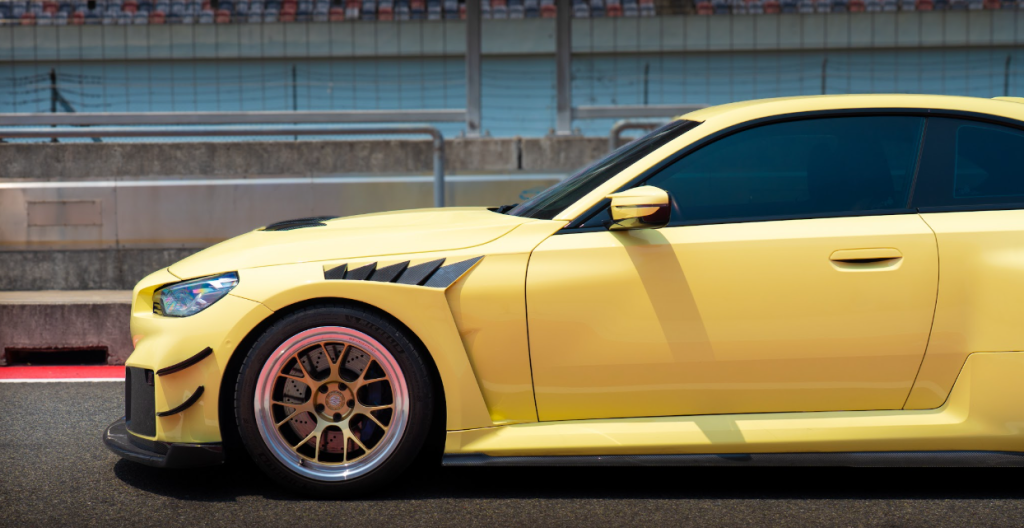
Rear spoilers and wings are frequently described as interchangeable components, but their aerodynamic behavior differs.
A trunk spoiler primarily modifies airflow separation around the rear bodywork. Depending on its shape, it may influence rear lift and drag.
A rear wing uses an aerodynamic profile to generate a pressure difference that can produce downforce.
For the BMW M2 G87, the distinction matters because additional rear downforce changes the distribution of aerodynamic loading between the axles.
A substantial rear wing combined with an otherwise standard front end may create a rearward aerodynamic bias.
Conversely, a highly effective front splitter without appropriate rear support can alter the balance in the opposite direction.
A complete aerodynamic package should therefore consider both axles rather than treating each component independently.
For everyday use, a subtle carbon fiber trunk spoiler may provide the desired styling without introducing the complexity of a large wing.
Track-focused packages require greater attention to mounting strength, aerodynamic balance, and documented performance.
Why Carbon Fiber Is Suitable for G87 Aero Components
Carbon fiber reinforced polymer is widely used in performance automotive applications because it offers favorable stiffness-to-weight characteristics.
Unlike conventional metals, composite structures can be engineered with specific fiber orientations to resist anticipated loads.
This flexibility is particularly valuable for splitters, wings, and other components that must maintain their shape under aerodynamic pressure.
Lightweight Construction and Rigidity
Carbon fiber components can achieve high structural stiffness without unnecessary material thickness.
However, the weight advantage depends on the complete component construction. A carbon fiber part is not automatically lighter than every alternative.
For aerodynamic applications, rigidity is often more important than small differences in mass.
A wing that bends excessively under load may experience changes in its effective angle and aerodynamic characteristics.
Manufacturing Quality
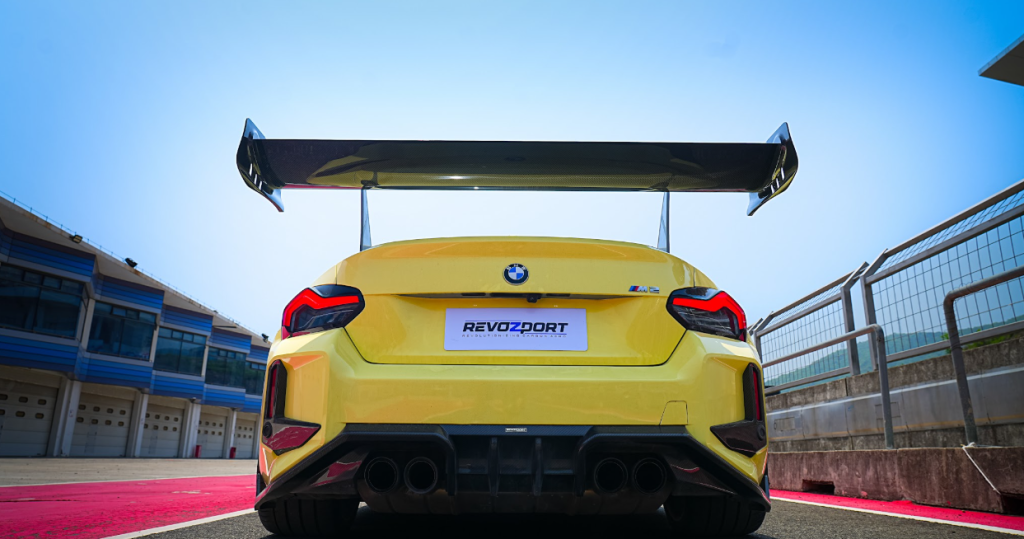
Prepreg carbon fiber uses reinforcement material pre-impregnated with resin before curing.
Controlled manufacturing processes can improve consistency in resin content and laminate construction.
Autoclave processing may further support consolidation under controlled temperature and pressure.
Nevertheless, material terminology alone does not establish quality. Fiber orientation, surface finish, mounting reinforcement, and manufacturing tolerances remain important considerations.
Complete BMW M2 G87 Aero Kits vs. Individual Upgrades
Individual carbon fiber components allow owners to modify their vehicles gradually. However, a complete aerodynamic package offers an important advantage: the components can be developed around a shared design objective.
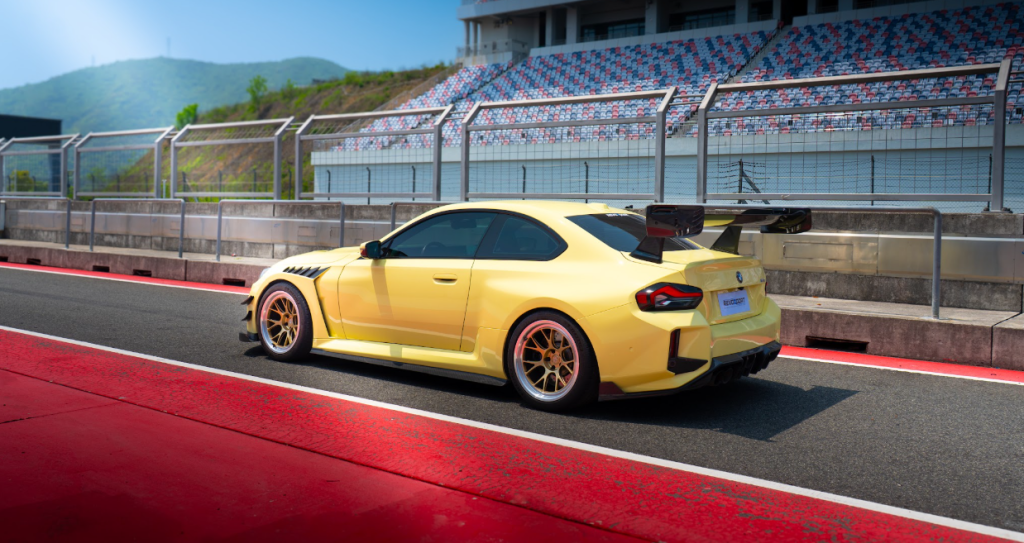
The front splitter influences airflow entering the underbody region. Side skirts interact with lower-body airflow, while the diffuser manages part of the underbody exit flow.
A rear wing can further influence aerodynamic balance.
Because these effects interact, a coordinated package may deliver more predictable behavior than unrelated aftermarket components.
For the G87 platform, the BMW M2 G87 aero kit from REVOZPORT includes race-oriented components such as a front splitter and air dam, bumper canards, and carbon fiber hood elements.
The manufacturer describes its G87 program as using dry carbon fiber construction and computational fluid dynamics (CFD) during aerodynamic development. These are manufacturer-stated design characteristics; specific performance gains should be evaluated against available test data.
CFD allows engineers to study predicted airflow patterns and pressure distributions before physical testing.
Its accuracy depends on the simulation setup, making validation important when assessing real-world aerodynamic performance.
Choosing the Right BMW M2 G87 Carbon Fiber Aero Kit
Selecting aerodynamic components requires more than comparing appearance and material finish.
Confirm Model-Specific Fitment
The G87 M2 uses different exterior bodywork from the earlier F87 generation.
Front bumper geometry, mounting points, and rear body dimensions affect compatibility.
Owners should verify the model year, bumper configuration, and any existing factory or aftermarket modifications before purchasing parts.
Evaluate Installation Requirements
Functional aerodynamic components can experience substantial loads at speed.
Mounting brackets, fasteners, and supporting structures must be suitable for the intended application.
Professional installation is particularly important for structural splitters and rear wings.
Poorly secured components can create safety risks, regardless of the quality of the carbon fiber itself.
Consider Street and Track Requirements
A street-oriented G87 build benefits from components that preserve reasonable ground clearance, service access, and everyday practicality.
A competition-focused setup places greater emphasis on aerodynamic balance, structural mounting, and repeatable performance.
Owners should also verify that modifications comply with applicable road-use regulations.
Maintaining Carbon Fiber Aero Components
Carbon fiber exterior parts require appropriate care to preserve their appearance and condition.
Most exposed carbon fiber components use a protective clear coating. Regular cleaning with automotive-safe products helps prevent dirt accumulation and surface contamination.
Owners should inspect mounting points, brackets, and exposed edges periodically.
Any cracks, loosened fasteners, or signs of structural damage should be assessed before further use.
For low-mounted splitters and side skirts, additional attention is worthwhile because these components are exposed to road debris and ground contact.
Final Thoughts
Carbon fiber aero kits can give the BMW M2 G87 a more focused appearance while offering opportunities to improve aerodynamic performance.
Front splitters, side skirts, diffusers, and wings each influence different regions of airflow. Their effectiveness depends on engineering quality, installation, and integration with the original vehicle.
For styling-focused owners, a coordinated selection of carbon fiber components can strengthen the G87’s distinctive proportions without overwhelming its factory design.
For performance-oriented applications, documented aerodynamic development and balanced component selection matter more than aggressive appearance alone.
The most effective BMW M2 G87 upgrades are those chosen with a clear understanding of the vehicle’s design, intended use, and the engineering purpose behind each component.

Subscribe
Login
0 Comments
Oldest

More Stories
Why Your BMW Makes the Perfect Clone (And How to Check It Hasn’t Already Happened)
Park a 3 Series in any UK car park, and there's a good chance another one is a few spaces...
What Happens When a BMW Is Declared a Total Loss? A Real Case Study
Owning a BMW often means investing in a vehicle with a combination of performance, technology, comfort, and premium features. When...
The Hidden Engineering Details Behind BMW Performance
For more than half a century, Bayerische Motoren Werke has built its global identity around a singular promise: the uncompromised...
5 Smart Ways to Choose the Right BMW Dealership for Your Next Upgrade
Buying another BMW should feel exciting, not stressful. If you're planning to trade your current vehicle for something newer, the...
Thinking About a BMW EV? Your Home May Need These Upgrades
Buying a BMW EV can mean more than choosing a new vehicle. Depending on where and how you plan to...
Why the Android Head Unit Market is High-Risk for BMW Owners (And How to Upgrade Safely)
For many BMW enthusiasts, the driving dynamics of models like the E90, F30, or F10 remain unmatched by modern cars....