
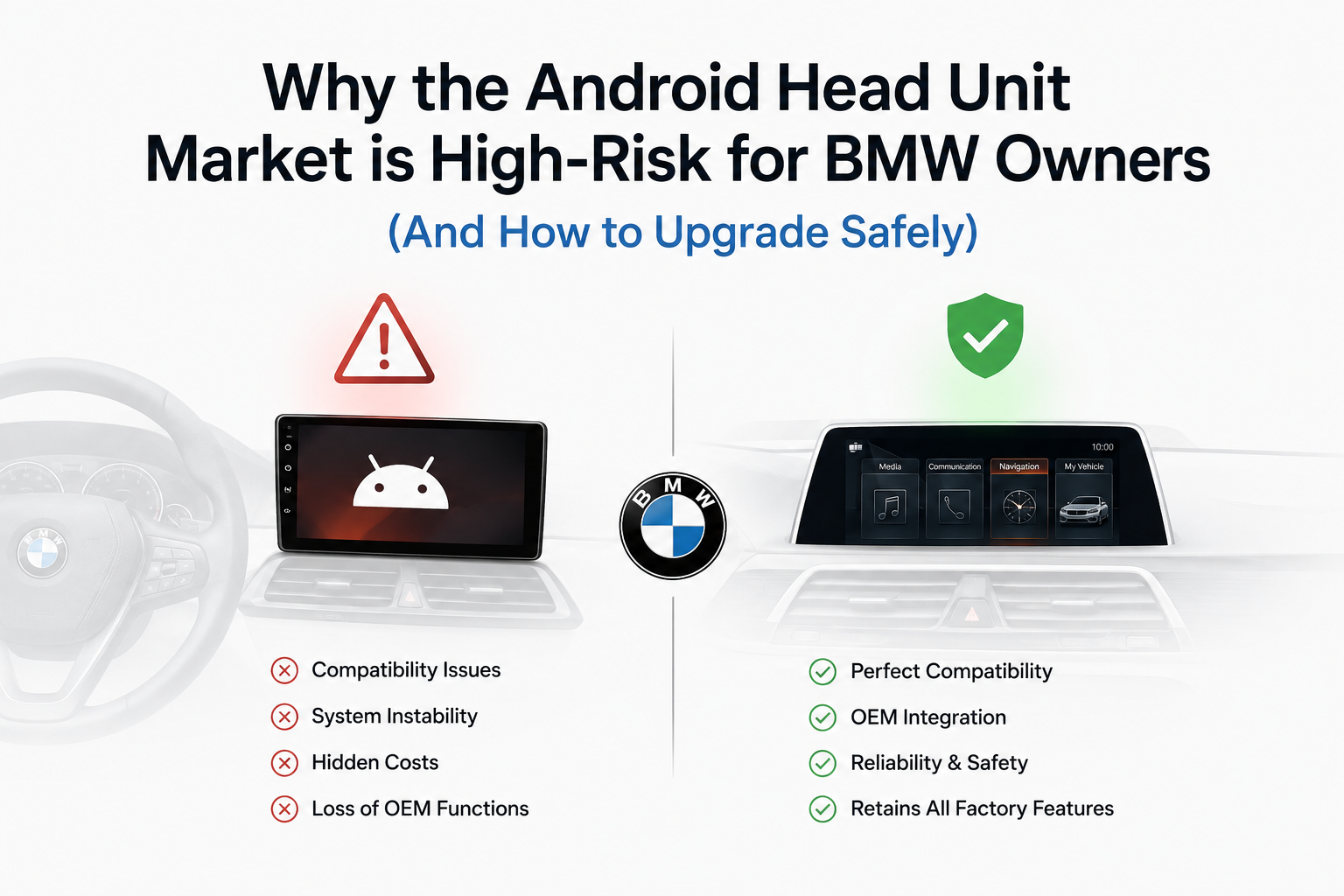
Why the Android Head Unit Market is High-Risk for BMW Owners (And How to Upgrade Safely)

Read Time:4 Minute, 36 Second
For many BMW enthusiasts, the driving dynamics of models like the E90, F30, or F10 remain unmatched by modern cars. However, while the chassis and engine hold up beautifully, the dashboard technology does not. Upgrading from an outdated CCC, CIC, or early NBT iDrive system to a vibrant Android touchscreen with Wireless Apple CarPlay and Android Auto is the ultimate interior facelift.
Unfortunately, the aftermarket Android head unit industry has become a minefield. A quick search reveals hundreds of cheap screens promising a seamless upgrade. For a standard economy car, a cheap stereo is a minor annoyance. For a highly engineered, digitally complex BMW, installing a budget generic head unit is a massive risk.
Before you pry off your dashboard trim, here is what you need to know about the high-risk side of aftermarket BMW stereos, and how to protect your Ultimate Driving Machine.
1. The iDrive and CANbus Nightmare
A BMW is basically a sophisticated computer network on wheels. Everything from your steering wheel volume buttons to your reverse chimes and oil level sensors communicates through a digital network called the CANbus.
When you install an aftermarket screen, it needs a “CANbus Decoder” to speak BMW’s language.
- The Risk: Budget manufacturers often use generic, poorly coded decoders. When installed, these units frequently fail to communicate with the iDrive controller. Worse, they can introduce digital “noise” into the network, causing random dashboard warning lights, disabling parking sensors, or failing to display crucial vehicle service information on the new screen.
- The Battery Drain: One of the most common issues with cheap generic screens in BMWs is parasitic battery drain. Because the cheap CANbus decoder doesn’t understand the BMW “sleep” command, the screen stays partially powered on after you lock the doors, leaving you with a dead battery the next morning.
2. The Fiber-Optic Audio Trap (MOST Bus)
If your BMW is equipped with a premium sound system like Harman Kardon, Logic 7, or HiFi, the audio signal isn’t sent through traditional copper wire. It uses a high-speed fiber-optic loop known as the MOST bus.
- The Risk: Cheap Android head units rarely include the necessary fiber-optic decoding hardware. Generic sellers will ship you a standard wiring harness and expect you to bypass your expensive factory amplifier entirely. If you manage to get sound at all, you lose the rich, immersive audio quality you originally paid for, resulting in a flat, distorted sound profile.
3. The “Tacked-On” Aesthetic
A BMW interior is defined by premium materials and cohesive design. An upgrade should look like a natural evolution of the factory dashboard.
- The Risk: Budget units are mass-produced with generic plastic bezels that do not match the grain or color of BMW’s dashboard trims. Furthermore, cheap screens often have large bezels, poor viewing angles, and heavy glare. Instead of modernizing your interior, a generic unit makes your luxury cabin look like someone glued a cheap tablet to the dashboard.
How to Upgrade Safely
You do not have to settle for the outdated factory iDrive, nor do you have to risk your car’s electrical system with a generic marketplace bargain. You simply need to buy from a brand that understands BMW architecture.
If you want to eliminate the guesswork entirely, Car Tech Studio offers a masterclass in risk-free BMW upgrades. Unlike generic marketplace sellers, they know that a 2012 BMW 3-Series might have a CIC or an NBT system depending on the production month.
To prevent integration disasters, Car Tech Studio utilizes a mandatory “Photo Verification” process. Before shipping, their experts manually audit a photo of your current iDrive screen and controller. This ensures you receive the exact Plug-and-Play harness, the correct fiber-optic decoder for your Logic 7 or Harman Kardon amp, and a flawlessly programmed CANbus box. Furthermore, their premium units feature automotive-grade Snapdragon 8-core processors, anti-glare IPS displays that match OEM styling, and are backed by up to a 2-year warranty with lifetime human support.
Upgrading your BMW’s technology should enhance the luxury experience, not compromise it. By avoiding budget traps and investing in verified, premium hardware, you can modernize your interior with complete peace of mind.
Frequently Asked Questions (FAQ)
1. Will I lose my original iDrive menus if I upgrade? Not if you buy the right unit. Premium BMW-specific screens run a dual-system interface. You can enjoy modern Android features and Wireless CarPlay, but with the press of a button, the screen will switch back to display your original, untouched factory BMW iDrive menu.
2. Will my factory iDrive knob still work? Yes. A high-quality system with a properly programmed CANbus decoder allows you to use your original factory iDrive rotary controller to navigate through the new CarPlay and Android menus, keeping your hands off the touchscreen while driving.
3. Do I need to cut wires to install a new screen? Absolutely not. You should never cut factory wiring in a BMW. Premium systems utilize 100% Plug-and-Play harnesses that click directly into your factory quadlock connectors, ensuring your vehicle’s electrical warranty remains completely intact.
4. How do I know if I have CCC, CIC, NBT, or EVO? The interface style and the shape of the menu tiles usually give it away, but the safest method is the “Photo Audit.” Simply sending a picture of your current screen’s main menu to a premium retailer before purchasing is the only foolproof way to guarantee you receive the correct hardware.

Subscribe
Login
0 Comments
Oldest
More Stories
What Happens When a BMW Is Declared a Total Loss? A Real Case Study
Owning a BMW often means investing in a vehicle with a combination of performance, technology, comfort, and premium features. When...
The Hidden Engineering Details Behind BMW Performance
For more than half a century, Bayerische Motoren Werke has built its global identity around a singular promise: the uncompromised...
5 Smart Ways to Choose the Right BMW Dealership for Your Next Upgrade
Buying another BMW should feel exciting, not stressful. If you're planning to trade your current vehicle for something newer, the...
Thinking About a BMW EV? Your Home May Need These Upgrades
Buying a BMW EV can mean more than choosing a new vehicle. Depending on where and how you plan to...
Hidden Storage Upgrades That Make Trucks More Useful
Trucks are built to be useful, but everyday storage can still become a problem. Drivers often carry tools, straps, chargers,...
When Is the Right Time to Sell Your Car?
Deciding when to sell your car isn't always straightforward. Many drivers continue using their vehicles because they're familiar, paid off,...